




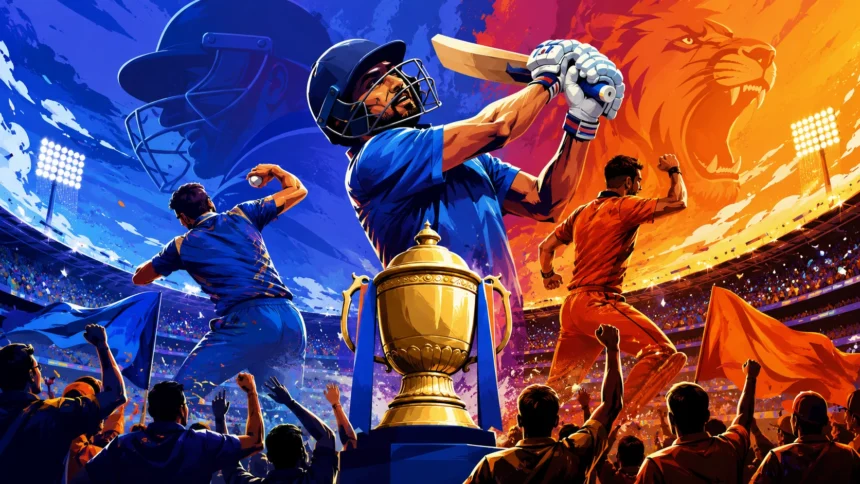
IPL explained simply: understand teams, auctions, money, rivalries, fan wars, controversies and why India treats IPL like a festival.
- The IPL is not just a cricket tournament. It is India’s annual national group chat with a scoreboard.
- What is IPL?
- Why is IPL important?
- How does IPL work?
- Key players or main elements involved
- Timeline or background
- Why Indian readers should care
- Common myths and misunderstandings
- Myth 1: IPL is only entertainment, not serious cricket
- Myth 2: The richest team always wins
- Myth 3: Big-name players guarantee trophies
- Myth 4: Auction price equals player quality
- Myth 5: Fan wars are always toxic
- Myth 6: IPL destroys international cricket
- Myth 7: Only batters matter in IPL
- Current trend or latest context
- Pros, cons, risks and controversies
- Quick Fact Box
- Nokjhok Take
- What to watch next
- Related Nokjhok articles to read next
- Conclusion
- 1. What is IPL in simple words?
- 2. How many teams are in the IPL?
- 3. What does IPL explained mean?
- 4. How does the IPL auction work?
- 5. Why do IPL players get so much money?
- 6. Why is IPL so popular in India?
- 7. Is IPL only entertainment?
- 8. Why do IPL fan wars happen?
- 9. Which IPL teams have won the most titles?
- 10. Why should beginners understand IPL?
The IPL is not just a cricket tournament. It is India’s annual national group chat with a scoreboard.
Every summer, uncles become analysts, cousins become selectors, office meetings become “just one over” breaks, and WhatsApp groups turn into war rooms. If India had a festival for cricket, money, memes, celebrities, arguments and heartbreak, it would probably be called the Indian Premier League.
In this IPL explained guide, we will break down how the league works, why teams spend crores on players, why auctions look like a stock market with jerseys, why fan wars get louder than stadium speakers, and why the IPL is now one of the biggest sports-entertainment machines in the world.
Nokjhok one-liner: IPL is where cricket meets capitalism, and your favourite team still finds a way to give you blood pressure.
What is IPL?
The Indian Premier League, or IPL, is a professional T20 cricket league organised by the Board of Control for Cricket in India, commonly known as BCCI. It started in 2008 and has grown into India’s biggest cricket entertainment property. The official IPL website lists 10 city-based franchise teams, including Chennai Super Kings, Mumbai Indians, Royal Challengers Bengaluru, Kolkata Knight Riders, Gujarat Titans, Lucknow Super Giants, Delhi Capitals, Punjab Kings, Rajasthan Royals and Sunrisers Hyderabad. (IPL T20)
In simple English, IPL is a cricket league where privately owned teams buy players, play a tournament, compete for the trophy, build fan bases, sell sponsorships, earn from broadcasting, and create enough drama to power Indian social media for two months.
Each match is played in the T20 format. That means each team gets 20 overs. Fast game. Big shots. Quick collapses. Sudden comebacks. Perfect for TV, mobile screens, stadium crowds and meme pages.
Why is IPL important?
The IPL matters because it changed cricket from a sport into a full entertainment economy.
Before IPL, Indian cricket was mainly about international matches. India vs Pakistan. India vs Australia. World Cup. Test series. ODI tournaments. Then IPL arrived and said, “What if Indians supported city teams like football fans support clubs?”
Suddenly, Chennai had CSK. Mumbai had MI. Bengaluru had RCB. Kolkata had KKR. Players from different countries shared dressing rooms. Rival national players became teammates. Young Indian players got a stage with global stars. Brands got prime-time attention. Fans got yearly emotional damage.
The IPL is important for five big reasons:
First, it gives young cricketers a direct route to fame. One good season can change a player’s career.
Second, it creates massive money for cricket. BCCI announced that IPL media rights for the 2023–2027 cycle were sold for a cumulative figure of INR 48,390.32 crore, subject to formal completion. (BCCI)
Third, it has made cricket more data-driven. Match-ups, strike rates, death-over economy, left-right combinations and impact substitutions are now part of normal fan discussion.
Fourth, it is entertainment. Team songs, owners, celebrity appearances, dugout reactions, camera angles and social media content are part of the product.
Fifth, it creates identity. Some fans support teams because of geography. Some because of players. Some because of childhood memories. Some because they enjoy pain and chose teams that test their patience every year.
How does IPL work?
At the basic level, the IPL works like a franchise-based sports league.
Teams are owned by franchise owners. These teams build squads through auctions, retentions, trades and replacement signings. Then they play a league stage followed by playoffs. The top teams qualify for the knockout phase, and one team eventually lifts the trophy.
The IPL system has a few major parts.
1. Teams and squads
Each team has a squad of Indian and overseas players. Teams must balance star power, role clarity and budget. They need openers, middle-order batters, finishers, fast bowlers, spinners, wicketkeepers, all-rounders and backup options.
A team with 11 famous names may still fail if the roles are not balanced. IPL is not a celebrity dinner. It is a tactical puzzle.
2. Auction and purse
The IPL auction is where franchises bid for players. Every team gets a purse, meaning a limited budget. They cannot just buy everyone like a rich cousin at a wedding buffet.
For the 2025–2027 player regulations, IPL announced that the total salary cap includes auction purse, incremental performance pay and match fees. The salary cap was listed as ₹146 crore for 2025, ₹151 crore for 2026 and ₹157 crore for 2027. (IPL T20)
This is why auctions are dramatic. Teams must decide: Do we spend big on one superstar? Do we build depth? Do we chase a fast bowler? Do we keep money for later? Do we panic after losing Plan A?
Auction tables look calm from outside. Inside, it is probably Excel sheet, astrology and blood pressure combined.
3. Retentions
Before mega auctions or certain auction cycles, teams retain some players. Retention means keeping players instead of sending them back into the auction pool.
For IPL 2026, the official IPL website said teams retained 173 players, including 49 overseas players, and that a combined purse of ₹237.55 crore was available for 77 player slots at the auction. (IPL T20)
Retention is emotional and strategic. Fans ask: Why release him? Why retain him? Why pay so much? Why not keep the local hero? Meanwhile teams are thinking about age, form, future roles, budget, injury history and availability.
4. Playoffs
After the league stage, the top teams move into playoffs. The playoff system rewards teams that finish higher. Usually, the top two teams get an extra chance, while lower qualifiers face more pressure.
This keeps the league stage meaningful. Every net run rate calculation becomes a mini board exam.
5. Broadcast and digital viewing
IPL is built for modern viewing. Some watch on TV. Some stream on phones. Some watch highlights. Some only watch reels of sixes, wickets and angry dugout reactions.
The IPL’s media rights show how valuable the tournament is. BCCI’s official announcement for the 2023–2027 media rights cycle mentioned INR 48,390.32 crore as the cumulative rights value. (BCCI)
That number tells you one thing clearly: IPL is not just cricket. IPL is premium attention.
Key players or main elements involved
The IPL ecosystem has many players. Not just the ones holding bats.
BCCI
BCCI owns and runs the league through the IPL structure. It manages rules, schedules, auctions, media rights and league governance.
Franchise owners
Owners invest in teams, hire management, build brand identity and chase both trophies and business value. Some owners are business groups, some are celebrity-linked groups, and some are large companies.
Players
Players are the visible stars. Indian youngsters, senior icons, international cricketers, uncapped players, specialists and all-rounders all fight for spots.
Coaches and analysts
Modern IPL teams rely heavily on coaches, scouts, analysts, trainers and strategy teams. Many decisions that look emotional to fans are actually based on data.
Sponsors and broadcasters
Brands love IPL because it delivers attention at scale. Title sponsorship, team sponsorship, jersey branding, digital ads, fantasy games and broadcast packages are major parts of the ecosystem. Tata Group secured IPL title sponsorship rights for 2024–2028 for INR 2500 crore, according to IPL’s official announcement. (IPL T20)
Fans
Fans are the real fuel. Without fans, IPL is just expensive cricket. With fans, it becomes a festival, a debate show, a meme factory and sometimes a counselling session.
Timeline or background
The IPL began in 2008 with eight teams and quickly became a major force in world cricket. Rajasthan Royals won the first season, creating the perfect underdog story. The official IPL teams page still records RR as the 2008 winner, while CSK, MI, KKR, SRH, GT and RCB are among title-winning teams listed there. (IPL T20)
Over the years, the league expanded, changed teams, saw controversies, introduced new franchises and became more commercially powerful. Gujarat Titans and Lucknow Super Giants joined the league in 2022, making it a 10-team competition.
The league has also created eras. The CSK-MI dominance era. The KKR revival periods. The RCB heartbreak-to-glory narrative. The rise of young Indian stars. The overseas all-rounder obsession. The auction-day madness.
The interesting part is that IPL history is not just about winners. It is about moments: last-ball finishes, orange-cap chases, purple-cap races, captaincy debates, unexpected collapses, super overs, viral celebrations and fans saying “next year pakka” with suspicious confidence.
Why Indian readers should care
Indian readers should care because IPL sits at the intersection of sport, money, identity and culture.
It affects cricket careers. A strong IPL season can push a player into national selection debates. A poor season can trigger endless trolling.
It affects entertainment habits. Families plan dinners around matches. Offices run fantasy leagues. Social media becomes IPL-first.
It affects business. Sponsorships, streaming, ticketing, merchandise, advertising and celebrity endorsements all gain momentum during the season.
It affects city identity. Chennai vs Mumbai is not just yellow vs blue. RCB support is not just Bengaluru. KKR carries Kolkata’s emotion. Punjab fans bring full drama. Rajasthan fans enjoy underdog energy. Gujarat fans arrived with instant trophy confidence.
Most importantly, IPL gives Indian fans an emotional investment every night. Sometimes joy. Sometimes pain. Sometimes both in the same over.
Common myths and misunderstandings
Myth 1: IPL is only entertainment, not serious cricket
Wrong. IPL is entertaining, but the cricket is extremely competitive. Players are judged on specific roles, match-ups, pressure handling and consistency.
Myth 2: The richest team always wins
Not exactly. Every team works within salary cap and squad rules. Money helps, but auction strategy, team balance and execution matter more.
Myth 3: Big-name players guarantee trophies
No. A team needs role clarity. Too many stars without balance can become a luxury hotel with no kitchen.
Myth 4: Auction price equals player quality
Auction price often reflects demand, scarcity and team need. A player may become expensive because three teams need the same role, not because he is automatically the best player in the world.
Myth 5: Fan wars are always toxic
Not always. Many fan wars are harmless banter. But when it becomes personal abuse, player targeting or regional hate, it crosses the line.
Myth 6: IPL destroys international cricket
This is debated. IPL does take calendar space, but it also develops talent, improves pressure skills and financially strengthens players.
Myth 7: Only batters matter in IPL
No. Bowlers win tournaments. Death bowling, powerplay wickets, spin control and matchup bowling often decide seasons.
Current trend or latest context
The latest IPL context is that the league continues to grow as a year-round property. Fans no longer wait only for matches. Auctions, retentions, trades, injury updates, squad analysis and social media campaigns keep IPL alive even in the off-season.
For IPL 2026, the official auction page listed 77 players sold, 29 overseas players sold, and Cameron Green as the most expensive player at ₹25.20 crore. (IPL T20)
This shows where the league is headed: high-value all-rounders, flexible squads, tactical depth and global talent. Teams are not only buying players. They are buying roles.
Another trend is the rise of data-backed fandom. Earlier fans said, “He is good.” Now fans say, “His strike rate against left-arm pace in middle overs is concerning.” IPL has turned normal people into part-time analysts with full-time confidence.
Pros, cons, risks and controversies
Pros
IPL gives young players visibility. It improves domestic cricket’s commercial value. It creates jobs in sports, media, marketing, coaching, analytics and event management. It gives fans high-quality cricket almost every evening.
It also brings global cricket together. A young Indian bowler can share a dressing room with an international legend. That learning is priceless.
Cons
The schedule can be intense. Player workload and injuries are real concerns. Too much focus on T20 can also affect how some players approach longer formats.
There is also the risk of over-commercialisation. When every moment becomes content, cricket can sometimes feel like it is wearing too many sponsor stickers.
Controversies
IPL has seen controversies over team management, player availability, captaincy decisions, fan behaviour, betting-related scandals in earlier years, and scheduling debates. Like every big sporting property, it comes with pressure, politics and public scrutiny.
The responsible view is simple: enjoy the drama, but separate verified facts from WhatsApp University.
Quick Fact Box
| Point | Detail |
|---|---|
| Topic in one line | IPL is India’s franchise-based T20 cricket league combining sport, business and entertainment. |
| Why it matters | It shapes cricket careers, fan culture, sports business and digital conversations. |
| Key players involved | BCCI, franchises, players, coaches, sponsors, broadcasters and fans. |
| Indian relevance | It is one of India’s biggest annual entertainment and cricket events. |
| Biggest confusion | How auctions, purse limits, retentions and team-building actually work. |
| One surprising fact | IPL media rights for 2023–2027 were announced by BCCI at INR 48,390.32 crore. (BCCI) |
| What to watch next | Auction strategy, player workload, new stars, fan culture and media-rights evolution. |
Nokjhok Take
IPL is cricket, but with background music, balance sheets, heartbreak and brand strategy.
It is not just 20 overs per side. It is a full Indian emotion package: team loyalty, auction anxiety, captaincy debates, celebrity shots, memes, fantasy points and one friend who says “I told you” after every match.
The real beauty of IPL is that it gives everyone a role. Players play. Owners spend. Coaches plan. Broadcasters package. Brands advertise. Fans overreact. Meme pages harvest.
Punchy one-liner: IPL is not just a league; it is India’s yearly reminder that hope can be renewed at the auction table.
What to watch next
The next phase of IPL will be shaped by five big questions.
First, will teams focus more on all-rounders and multi-skill players? Auction prices suggest flexibility is becoming more valuable.
Second, how will young Indian players handle instant fame? One good season can create national attention, but consistency is the real test.
Third, will player workload become a bigger issue? With packed cricket calendars, teams and boards will need smarter fitness planning.
Fourth, will fan wars become more entertaining or more toxic? The answer depends on whether fans choose banter or abuse.
Fifth, how will digital platforms change IPL viewing? Short highlights, interactive stats, fantasy gaming, creator-led commentary and meme culture will keep reshaping the way fans consume cricket.
Related Nokjhok articles to read next
- SRH Lowest Score: Hyderabad’s 86-Run Horror Show
- DC vs RCB Highlights: RCB’s 81-Ball Win Turns Delhi Into Meme Material
- DC vs PBKS Highlights: Punjab’s 265 Chase Stuns IPL
- How IPL Teams Make Money: Sponsorships, Rights and Tickets
- IPL Playoffs Explained: Qualifier, Eliminator and Net Run Rate Drama
Conclusion
The IPL is simple on the surface: teams play T20 cricket and one wins the trophy.
But underneath, it is a layered machine. It has franchises, auctions, salary caps, retentions, sponsors, broadcasters, coaches, analysts, fans, memes, rivalries, controversies and emotions. That is why an IPL explained article cannot stop at “10 teams play cricket.” It has to explain why the tournament feels like sport, cinema, business school and family drama rolled into one.
The next time someone says, “IPL is just entertainment,” show them the auctions, media rights, scouting systems, tactical matchups and fan economy. Then offer them popcorn.
Because in India, IPL is not watched quietly. It is discussed loudly, judged emotionally and remembered meme-wise.
10. Quick Fact Box
Topic in one line: IPL is India’s franchise-based T20 cricket league where teams, money, strategy, fandom and entertainment meet.
Why it matters: It influences cricket careers, sports business, digital culture and Indian fan identity.
Key people/players involved: BCCI, team owners, players, coaches, broadcasters, sponsors, analysts and fans.
Indian relevance: IPL is one of India’s biggest annual sports-entertainment events.
Biggest confusion: How auctions, purse limits, squad building and retentions actually work.
One surprising fact: BCCI announced IPL media rights for 2023–2027 at INR 48,390.32 crore. (BCCI)
What to watch next: Auction trends, all-rounder prices, young Indian stars, fan wars, digital viewing and player workload.
Nokjhok Take
IPL is cricket wearing sunglasses, holding a balance sheet, and entering the stadium with background music.
It gives India everything it loves: sport, city pride, star power, family debates, emotional loyalty, money talk and meme material.
Punchy one-liner: IPL is where one over can change the match, one auction bid can change a career, and one fan tweet can start a civil war in the comments.
FAQs
1. What is IPL in simple words?
IPL is a professional T20 cricket league in India where city-based franchise teams compete every year. It combines cricket, entertainment, business, auctions, sponsors and massive fan culture.
2. How many teams are in the IPL?
The official IPL teams page currently lists 10 teams: CSK, DC, GT, KKR, LSG, MI, PBKS, RR, RCB and SRH. (IPL T20)
3. What does IPL explained mean?
IPL explained means understanding how the league works beyond matches: teams, auctions, salary caps, retentions, playoffs, media rights, money, fan wars and controversies.
4. How does the IPL auction work?
In the IPL auction, franchises bid for players using a limited purse. Teams must build balanced squads within budget instead of simply buying every star player.
5. Why do IPL players get so much money?
IPL players earn high amounts because teams compete for limited talent, especially players with rare skills like fast bowling, finishing, wicketkeeping or all-round ability. Media rights, sponsorships and fan attention also make the league commercially powerful.
6. Why is IPL so popular in India?
IPL is popular because it mixes cricket with city loyalty, star players, short-format excitement, celebrities, memes, fantasy gaming and daily match drama.
7. Is IPL only entertainment?
No. IPL is entertaining, but it is also serious cricket. Teams use scouting, analytics, strategy, role clarity and pressure-based selection to compete.
8. Why do IPL fan wars happen?
Fan wars happen because supporters become emotionally attached to teams, players and rivalries. Healthy banter is fun, but personal abuse or hate crosses the line.
9. Which IPL teams have won the most titles?
The official IPL teams page lists Mumbai Indians and Chennai Super Kings with five title years each, making them two of the league’s most successful teams. (IPL T20)
10. Why should beginners understand IPL?
Beginners should understand IPL because it is not just cricket. It explains modern sports business, fandom, digital culture, player careers, brand power and how India consumes entertainment.
Now your turn
Which part of IPL is more entertaining: the matches, the auction, the memes, or the fan wars?
Drop your view in the comments, share this with your cricket group, and explore more Nokjhok explainers before your WhatsApp group turns half-information into full confidence.