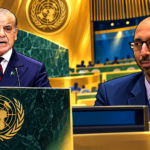





Bangladesh faces a rare power clash between the government and the army. Why Mohammad Yunus and the Army Chief are at odds—explained simply.
- What Triggered the Bangladesh Government–Army Conflict?
- Why the CGS Role Is So Powerful
- Who Supports Whom in This Power Struggle?
- Why Timing Makes This Conflict Risky
- Has This Happened Before in Bangladesh?
- Is the Bangladesh Army Divided?
- What Mohammad Yunus Brings to the Table
- What the Army Chief Is Concerned About
- Why This Matters to Ordinary Citizens
- Global Reaction and International Watch
- Featured Snippet–Friendly FAQs
- Suggested SEO Keywords
- Final Take: Tension, Not Turmoil
When politics and uniforms disagree, even a calm country starts holding its breath.
⚡ Punchy one-liner
In Bangladesh, the real battle right now isn’t at the border—it’s at the top.
Bangladesh is witnessing an unusual and sensitive moment: a visible rift between the civilian leadership and the military top brass. Reports suggest growing tension between Mohammad Yunus, the head of Bangladesh’s interim government, and General Waker‑Uz‑Zaman, the country’s Army Chief.
At the center of this disagreement is one powerful military appointment—the next Chief of General Staff (CGS) of the Bangladesh Army. While such appointments usually happen quietly, this time the disagreement has spilled into public discussion, raising concerns just weeks before national elections.
So what’s really going on? Why does one post matter so much? And should ordinary citizens be worried? Let’s unpack the story—clearly, calmly, and without drama.
For broader context on Bangladesh’s political landscape, BBC’s South Asia coverage provides useful background:
BBC analysis on Bangladesh politics
What Triggered the Bangladesh Government–Army Conflict?
The Immediate Spark—CGS Appointment
The tension revolves around the appointment of the Chief of General Staff (CGS)—one of the most influential positions in the Bangladesh Army.
The CGS:
- Oversees military operations
- Controls strategic planning
- Has influence over budget and logistics
In short, this role quietly shapes the army’s direction.
According to reports, Mohammad Yunus and General Waker-Uz-Zaman disagree on who should hold this post.

Why the CGS Role Is So Powerful
Many people assume the Army Chief alone runs the show. Not quite.
The CGS is:
- The operational brain of the army
- A key gatekeeper for defence spending
- Central to internal security planning
That’s why this appointment is not symbolic—it’s strategic.
Who Supports Whom in This Power Struggle?
The Army Chief’s Preference
General Waker-Uz-Zaman reportedly wants Lieutenant General Mainur Rahman, currently a senior commander, to be appointed CGS. From a military perspective, this choice reflects chain-of-command continuity.
The Interim Government’s Stand
Mohammad Yunus, along with the National Security Advisor, is said to support Major General Mir Mushfiqur Rahman, currently serving as GOC of the 24th Infantry Division.
To appoint him, a promotion to Lieutenant General would be required—something the Army Chief is reportedly unwilling to accept.
This disagreement has created a rare civil–military deadlock.
Why Timing Makes This Conflict Risky
Elections Are Around the Corner
Bangladesh is heading toward elections in the coming weeks. During such periods:
- Stability matters
- Neutrality of institutions is crucial
- Any perception of military involvement raises alarms
A public disagreement at the top can shake confidence, even if no immediate crisis exists.
Has This Happened Before in Bangladesh?
Bangladesh has a long and complex civil–military history. While the country has largely remained stable in recent years, past episodes show that tension between civilian leaders and the army can escalate if not managed carefully.
That’s why analysts are watching this situation closely.
For academic insight into civil–military relations in South Asia, the Council on Foreign Relations (CFR) offers valuable analysis:
CFR background on Bangladesh governance
Is the Bangladesh Army Divided?
As of now, there is no evidence of a split within the army.
What we are seeing is:
- A disagreement over process and authority
- Not a breakdown of discipline
- Not a rebellion or coup situation
Still, public disagreement itself is unusual and therefore newsworthy.
What Mohammad Yunus Brings to the Table
Mohammad Yunus is globally respected for his economic and social work. As interim leader, his priorities appear to be:
- Institutional balance
- Civilian oversight
- Avoiding concentration of military power
From his perspective, choosing the CGS is about long-term democratic stability, not short-term command convenience.
What the Army Chief Is Concerned About
From the military’s viewpoint:
- Promotions must follow established hierarchy
- Political interference can hurt morale
- Operational effectiveness depends on command clarity
General Waker-Uz-Zaman’s resistance likely reflects institutional caution, not defiance.
Why This Matters to Ordinary Citizens
This isn’t just elite politics.
Civil–military tension affects:
- Election credibility
- Investor confidence
- International perception
- Internal security balance
Even if nothing dramatic happens, perception alone can influence stability.
Global Reaction and International Watch
International observers are quietly monitoring developments. Bangladesh plays a key role in:
- Regional trade
- UN peacekeeping
- South Asian stability
Any sign of instability draws diplomatic attention—even if the crisis remains internal.
Featured Snippet–Friendly FAQs
Q1. What is the Bangladesh government army conflict about?
It is about a disagreement between the interim government and the army leadership over appointing the next Chief of General Staff.
Q2. Who is Mohammad Yunus in Bangladesh politics?
Mohammad Yunus is the head of Bangladesh’s interim government, appointed to oversee the transition toward elections.
Q3. Why is the CGS position important?
The CGS controls military operations, planning, and budget influence, making it one of the most powerful roles in the army.
Q4. Is there a risk of a military takeover?
At present, there is no indication of a coup or rebellion—only a high-level institutional disagreement.
Q5. Why does this matter before elections?
Because civil–military neutrality is essential for free and fair elections.
Suggested SEO Keywords
- Bangladesh government army conflict
- Mohammad Yunus Bangladesh
- Bangladesh Army Chief dispute
- Civil military tension Bangladesh
- CGS appointment Bangladesh
- Bangladesh political crisis
Final Take: Tension, Not Turmoil
This situation is best described as institutional friction, not chaos.
But friction at the top—especially before elections—demands careful handling. The coming days will show whether compromise prevails or the standoff deepens.
For now, Bangladesh stands at a delicate but manageable crossroads.
Do you think this conflict will remain controlled—or reshape Bangladesh’s political future?
Share your thoughts, forward this article, and explore our South Asia geopolitics series.
🔗 Suggested Related Post
“Why the US State Dept Dumped Calibri for Times New Roman”
Credit: NBT