




Heat wave Alert: India’s brutal summer has turned cities into ovens. Here’s why temperatures are rising and what you must do now.
- Breaking news from the weather department: India has officially entered “tandoor mode.”
- Why This Heat wave Alert Is Not Normal
- Heat wave Alert: 95 Of 100 Hottest Cities In India?
- What Is Causing This Heatwave?
- The IMD Warning: Don’t Treat This Like Normal Summer
- Animals Are Also Suffering
- Cities Turning Into “Bhatti Zones”
- What Should You Do During A Heat wave Alert?
- Heat Stroke Warning Signs You Must Know
- Why This Heatwave Matters Beyond Weather
- The Hidden Lesson For Indian Cities
- Conclusion: Heat wave Alert Means Act Now
- FAQs On Heat wave Alert
- 1. What is a Heat wave Alert?
- 2. Which Indian regions are facing heatwave conditions?
- 3. Can heatwave cause death?
- 4. What should I drink during a heatwave?
- 5. What is the best time to go outside during heatwave?
- 6. How can we help birds and animals during heatwave?
- 7. Why are Indian cities becoming so hot?
- Related Post Suggestion
Breaking news from the weather department: India has officially entered “tandoor mode.”
The fan is throwing hot air.
The cooler is asking for emotional support.
And stepping outside at 2 PM now feels like opening a pressure cooker with confidence.
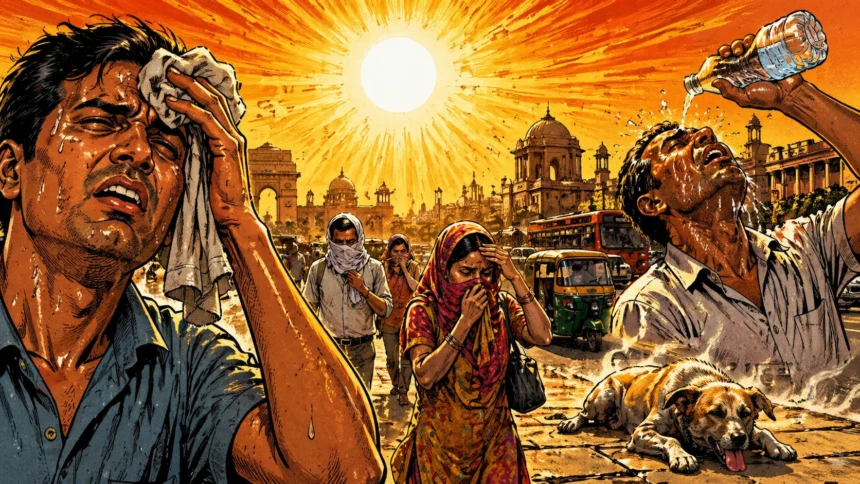
This Heat wave Alert is not just another summer complaint. It is a serious warning. The Indian Meteorological Department has warned of heatwave conditions across parts of north, west, central and eastern India, with Delhi forecast to touch 43–45°C in some areas. IMD has also warned of unusually warm nights in some regions, which means even midnight may behave like afternoon with better lighting. (India Meteorological Department)
One-liner: This summer is not knocking on the door; it has entered the house, taken the remote, and increased the temperature.
And here’s the strange part: this is not just about one city or one state. Reports say India has dominated global heat charts, with 95 of the world’s 100 hottest cities reportedly located in the country during this heat surge. (News On Air)
Why This Heat wave Alert Is Not Normal
India gets hot every year. We know that.
May and June arrive, ceiling fans become national heroes, and everyone suddenly becomes a watermelon expert.
But this year, the heat has started behaving like an overconfident villain in a South Indian movie. April itself has brought temperatures above 40°C in many cities. In some places, the mercury has crossed 45°C.
Vidarbha has been among the worst-hit regions. Akola touched 46.9°C, Amravati 46.8°C, Wardha 46.4°C, Yavatmal 46°C, and Nagpur 45.4°C. IMD issued orange and yellow alerts for several parts of the region. (The Times of India)
Ahmedabad also had a dramatic entry into the heat hall of fame. The city recorded 44.8°C, its third-highest April temperature, according to IMD data reported by TOI. Kandla touched 45.2°C, while Amreli, Rajkot, Surendranagar and Gandhinagar also crossed 44°C. (The Times of India)
This sounds ridiculous, but for many cities, “40 degrees” is no longer a warning. It has become the morning greeting.
Heat wave Alert: 95 Of 100 Hottest Cities In India?
This is the part where the story goes from “uff garmi hai” to “bhai, kya ho raha hai?”
A News On AIR report said India was facing severe heatwave conditions across multiple regions, with 95 of the world’s 100 hottest cities reportedly located in the country. (News On Air)
India Today also reported that real-time global temperature rankings showed 95 of the world’s 100 hottest cities in India on April 24, with several cities crossing 40°C and some approaching 45°C. (India Today)
Now, this ranking may change hour by hour. Weather data is a live game. But the larger message is clear: India is currently sitting right in the middle of a giant heat bubble.
And no, this is not the kind of bubble startup founders like.
What Is Causing This Heatwave?
Experts usually point to a mix of factors.
First, dry north-westerly winds are pushing hot air across large parts of India. Second, clear skies mean direct sunlight is hitting the ground without much interruption. Third, many cities are becoming heat traps because of concrete, traffic, glass buildings and reduced green cover.
In simple English: we built cities like ovens, then got shocked when they started baking.
The hidden truth most people ignore is that urban heat is not just a weather issue. It is also a planning issue.
More trees, better water bodies, shaded streets, cool roofs and smarter city design can reduce the heat burden. But instead, many cities have turned into “cement thalis” where the sun serves unlimited heat.
The IMD Warning: Don’t Treat This Like Normal Summer
The IMD forecast for Delhi mentioned heatwave conditions at isolated places, strong surface winds, and maximum temperatures likely in the 43–45°C range. The department also said temperatures may remain markedly above normal in some places. (India Meteorological Department)
That means this is not the time to show heroic stamina by walking outside at noon because “bas 10 minute ka kaam hai.”
Those 10 minutes can become a full medical episode.
Heat exhaustion and heatstroke are real dangers. The National Disaster Management Authority advises people to avoid going out in the sun, drink enough water, wear light cotton clothes, avoid strenuous outdoor work during peak heat, and take special care of children, elderly people and outdoor workers.
Most people don’t know this: heatstroke can become life-threatening very quickly if ignored.
Animals Are Also Suffering
This heatwave is not only troubling humans. Animals and birds are also getting hit badly.
In Madhya Pradesh’s Chhindwara district, reports said several pigeons were found collapsing and dying on the road due to intense heat and lack of water and shade. Temperatures in the region had crossed 40°C. (Amar Ujala)
That is heartbreaking.
So, while we are fighting with AC remotes and fridge bottles, birds and street animals are fighting for basic survival.
A simple bowl of water outside your home can actually save lives. This is not emotional drama. This is practical kindness.
Cities Turning Into “Bhatti Zones”
The scary thing about this Heat wave Alert is how widespread it is.
Delhi, Rajasthan, Gujarat, Maharashtra, Madhya Pradesh, Uttar Pradesh, Odisha, Bihar, Jharkhand and parts of central India are feeling the heat pressure.
Some areas are not just hot during the day. Nights are also becoming warmer. That is dangerous because the body does not get enough time to cool down.
Think of it like a phone battery.
If your phone overheats during the day but cools down at night, it survives. But if it stays hot all night too, the battery starts suffering.
The human body works in a similar way.
What Should You Do During A Heat wave Alert?
Let’s keep this practical.
Drink water before you feel thirsty. Once thirst arrives, your body has already started giving a warning.
Avoid going out between 12 PM and 4 PM unless necessary. If you must go, cover your head, wear light cotton clothes, and carry water.
Avoid heavy oily food during peak heat. Your stomach is not interested in becoming a furnace extension.
Use ORS, lemon water, buttermilk or coconut water when needed. But do not replace proper hydration with only sugary cold drinks.
Check on elderly parents, children, pregnant women, delivery workers, construction workers and street vendors.
Keep water for birds and animals.
And please, do not leave children, pets or elderly people inside parked cars. Even a few minutes can become dangerous.
Heat Stroke Warning Signs You Must Know
Here is the warning list.
If someone has very high body temperature, confusion, dizziness, fainting, dry skin, rapid breathing, headache or vomiting, do not wait for “thoda rest kar lo.”
Move the person to a cool place. Give water only if the person is conscious. Use wet cloths to cool the body. Call medical help immediately.
A heatwave is not a motivational challenge. You do not win a trophy for ignoring symptoms.
Why This Heatwave Matters Beyond Weather
This is not just about sweaty shirts and higher electricity bills.
Extreme heat affects school attendance, outdoor labour, agriculture, animals, food prices, health systems and productivity.
Workers lose working hours. Farmers face crop stress. Animals face dehydration. Cities face power demand spikes. Hospitals see more heat-related cases.
That is why experts are noticing that heat action plans are no longer optional. They are becoming basic survival tools for Indian cities.
According to the World Health Organization, extreme heat can worsen existing health conditions and increase the risk of heat-related illness, especially among vulnerable groups.
So yes, heat is not just weather. Heat is now public policy.
The Hidden Lesson For Indian Cities
Here is the secret nobody wants to discuss loudly: India cannot AC its way out of heatwaves.
ACs help indoors, but they also increase power demand. They release hot air outside. They are expensive. And millions of people cannot afford them.
The real solution is bigger.
More trees.
Better public shade.
Cool roofs.
Water bodies.
Heat shelters.
Early warnings.
Flexible school and work timings.
Better care for outdoor workers.
Smart urban planning.
Because when a city becomes too hot to walk in, it is not just a climate problem. It is a design failure.
Conclusion: Heat wave Alert Means Act Now
This Heat wave Alert should not be treated like another viral weather headline.
India is facing a serious heat spell. Several cities are crossing 40°C. Some have crossed 45°C. Reports say India has dominated global heat charts, with 95 of the world’s 100 hottest cities reportedly in the country during the heat surge.
That is not a joke. That is a warning with sunscreen on.
So drink water. Stay indoors during peak heat. Help animals. Check on vulnerable people. And stop pretending that “hum toh garmi ke aadat wale hain.”
Because this time, even the summer seems to have joined the gym and taken pre-workout.
FAQs On Heat wave Alert
1. What is a Heat wave Alert?
A Heat wave Alert is a warning issued when temperatures rise far above normal and may cause health risks.
2. Which Indian regions are facing heatwave conditions?
North, west, central and eastern India are facing severe heat, including Delhi, Rajasthan, Gujarat, Maharashtra, Madhya Pradesh, UP, Bihar, Odisha and Jharkhand.
3. Can heatwave cause death?
Yes. Severe heat can cause dehydration, heat exhaustion and heatstroke, which can be life-threatening if ignored.
4. What should I drink during a heatwave?
Water, ORS, lemon water, buttermilk and coconut water can help. Avoid too much alcohol, caffeine and sugary drinks.
5. What is the best time to go outside during heatwave?
Early morning or late evening is safer. Avoid going out between 12 PM and 4 PM.
6. How can we help birds and animals during heatwave?
Keep bowls of clean water outside, provide shade if possible, and avoid disturbing animals during peak heat.
7. Why are Indian cities becoming so hot?
Dry winds, clear skies, climate patterns, concrete-heavy urban design, traffic, and lack of green cover are making cities hotter.
Related Post Suggestion
DeepSeek V4: China’s AI Bombshell Hits OpenAI
Credit: NBT