




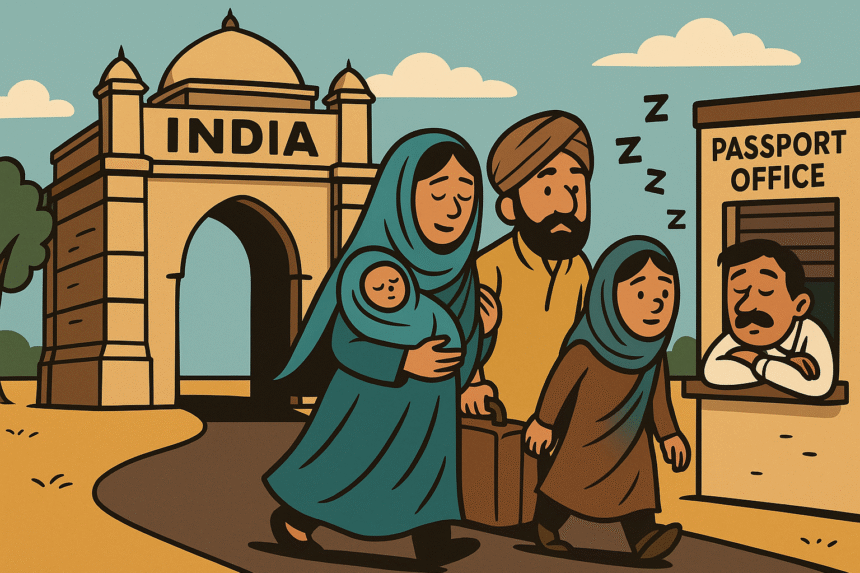
Hindus, Sikhs, Buddhists, Christians, Jains, and Parsis who entered India till 2024 can stay without a passport under the new order.
- Imagine reaching the airport without a passport and instead of panicking, you confidently say, “Bhai, Government ne bola hai—no passport, no tension!” Well, that’s pretty much the vibe of India’s new immigration order for certain minority communities. ✈️
- What’s the Big News?
- Who Benefits?
- What It Means (and What It Doesn’t)
- Nepal and Bhutan Clause
- A Quick Recap of the Timeline
- Human Angle: Why It Matters
- Politics and Policy Mix
- Why Now?
- How Refugees See It
- Wider Implications
- The Road Ahead
- Final Thoughts
Imagine reaching the airport without a passport and instead of panicking, you confidently say, “Bhai, Government ne bola hai—no passport, no tension!” Well, that’s pretty much the vibe of India’s new immigration order for certain minority communities. ✈️
What’s the Big News?
The Union Home Ministry has officially announced that Hindus, Sikhs, Buddhists, Jains, Parsis, and Christians who entered India from Afghanistan, Bangladesh, and Pakistan on or before December 31, 2024 can continue staying—even if they don’t have a valid passport.
This order is linked to the Immigration and Foreigners Act, 2025, which came into effect on Monday. Think of it as a bridge between survival and legality—an assurance for thousands who crossed the border fearing persecution.
For context, remember the Citizenship Amendment Act (CAA)? That law applied only to those who came before December 31, 2014. This new order pushes the timeline forward by an entire decade, covering people who entered till 2024.
(For those curious about how the CAA works, you can read more on the official government website.)
Who Benefits?
This relief is targeted mainly at minority communities who fled religious persecution in their home countries. The order includes:
- Hindus and Sikhs – the largest groups impacted, especially from Pakistan and Afghanistan.
- Christians – many of whom faced targeted violence.
- Buddhists and Jains – smaller communities seeking refuge.
- Parsis – though their numbers are limited, they too are covered.
For families who entered without valid travel papers or whose passports have long expired, this order is a lifeline.
What It Means (and What It Doesn’t)
Here’s the fine print in plain English:
✅ You can stay without a passport.
✅ No deportation fears.
✅ Basic security and stability in India.
But…
❌ This does not guarantee citizenship.
❌ You’ll still need to wait for further legal processes.
❌ It’s not a free visa to roam internationally.
In short, the rule keeps you safe within India’s borders.
Nepal and Bhutan Clause
Interestingly, the order also touches upon Nepal and Bhutan. Citizens of both these countries don’t need a passport or visa to enter India by land or air (as earlier). Indians entering these countries via the same route also enjoy the same privilege.
So, while Afghan Hindus might breathe a sigh of relief, a Nepali tourist is probably smirking and saying, “Dost, hum toh pehle se free entry wale hain!”
A Quick Recap of the Timeline
- CAA 2019 (effective 2020): Allowed fast-track citizenship, but only for those who came before Dec 31, 2014.
- Now (2025 order): Extends stay rights (not citizenship) to those who entered till Dec 31, 2024.
- Future: Full clarity on citizenship rights for post-2014 entrants may still depend on further parliamentary moves.
Human Angle: Why It Matters
Behind every law, there’s a story.
Think of a Hindu family from Pakistan who crossed the border in 2018. Their documents expired in 2020. They’ve lived in fear of being deported, despite starting a new life in Rajasthan. This order ensures they can breathe easier, at least for now.
Or picture a Sikh refugee from Afghanistan who lost everything after the Taliban returned. He reached India in 2022, but without valid papers. Now, he has legal grounds to stay safe.
This is not just law—it’s humanity in action.
Politics and Policy Mix
Like every major order, this one comes with political undertones. Supporters call it a compassionate step to protect persecuted minorities. Critics, however, ask why it doesn’t include Muslim sects who also face persecution in these countries.
The government’s stance is clear—it’s about providing shelter to specific minority groups with historical ties to India.
So, technically, your chaiwala might not ask for a passport if you order extra elaichi in your tea. But don’t push your luck at the airport check-in counter.
Why Now?
Timing is everything in politics. With the Immigration and Foreigners Act, 2025 freshly passed, the order comes across as both a legal necessity and a political signal.
It shows that India wants to position itself as a safe haven for minorities in its neighborhood, without immediately handing out citizenship.
How Refugees See It
For many, this order means:
- Kids can go to school without parents worrying about deportation.
- Families can apply for basic facilities like ration cards more confidently.
- Daily life won’t be a constant fear of police questioning.
One refugee summed it up perfectly: “Abhi passport nahin hai, par sukoon ka visa mil gaya.”
Wider Implications
This move also strengthens India’s soft power image. In a region often criticized for intolerance, India stands out as the country offering refuge—even if citizenship is still a long road.
It also highlights India’s balancing act—showing compassion while keeping the legal door for full citizenship tightly controlled.
The Road Ahead
- Clarity Needed on Citizenship – Will these communities eventually get citizenship, like under CAA, or just long-term stay rights?
- Implementation on Ground – How will local officials handle cases without harassing families?
- Political Debates – Expect Parliament, media, and street-corner chai debates to keep this alive.
Final Thoughts
This order is like a safety net. Not perfect, not permanent, but definitely better than walking the tightrope without one.
For thousands of minority families, it’s the difference between living in constant fear and finally feeling secure in India.
As always, laws are written on paper. But their true value is in how they change people’s lives. And this one, at least for now, promises some peace of mind.
Passport expired? Don’t worry. In India, humanity just got an extension stamp.
What do you think—should India go one step further and grant citizenship to these refugees? Share your thoughts, debate with friends, and don’t forget to follow us for more witty breakdowns of serious news.
👉 Related Post: “Legal Coup or Accountability? India’s PM/CM Removal Bills Explained”