





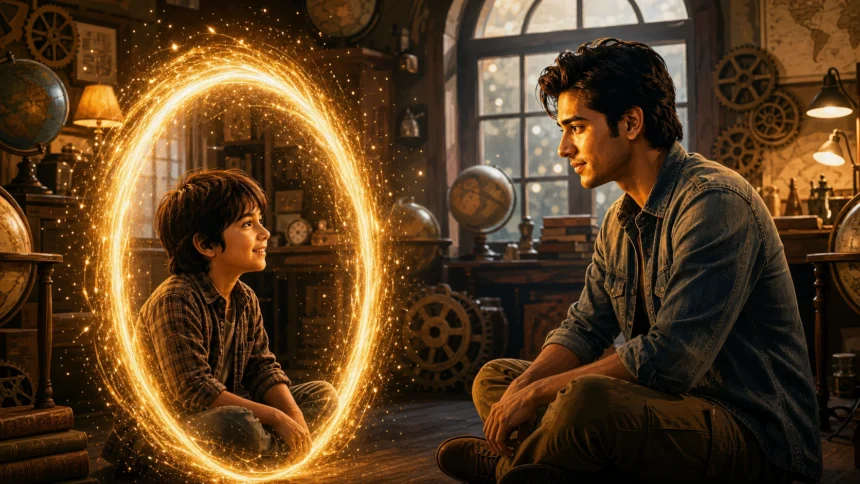
AI Photo Trend goes viral as users create emotional younger-self portraits with ChatGPT and image tools. Here’s how it works.
- What Is This AI Photo Trend?
- Why This AI Photo Trend Is Suddenly Everywhere
- The Emotional Hook: Why People Love Seeing Their Younger Self
- How Does The AI Photo Trend Work?
- What Photos Should You Use?
- The Prompt That Makes The Magic Happen
- Why Creators Are Jumping On This Trend
- The Hidden Content Formula Behind This AI Photo Trend
- Is This Trend Safe?
- The Emotional Warning Nobody Talks About
- How Brands Can Use This Trend
- Step-By-Step: How To Create Your AI Younger Self Photo
- Step 1: Select Two Photos
- Step 2: Choose Your AI Tool
- Step 3: Upload Your Photos
- Step 4: Write A Detailed Prompt
- Step 5: Generate The Image
- Step 6: Edit Lightly
- Step 7: Add A Caption
- Best Caption Ideas For This AI Photo Trend
- The Nokjhok Reality Check
- Final Verdict: AI Photo Trend Is More Than A Pretty Edit
- FAQs On AI Photo Trend
- 1. What is the AI Photo Trend?
- 2. What is “Meet Your Younger Self”?
- 3. Which tools can create AI younger self photos?
- 4. Do I need two photos for this trend?
- 5. Is the AI Photo Trend safe?
- 6. What prompt should I use?
- 7. Why is the AI Photo Trend so popular?
- Related Post Suggestion
Instagram’s New Nostalgia Hack
Breaking news from Instagram’s emotional department: people are no longer just posting vacation photos, gym selfies, and food plates.
Now they are meeting their childhood selves.
Yes, one photo has your present-day version sitting next to your younger version, like time travel decided to become an Instagram filter.
The latest AI Photo Trend is called “Meet Your Younger Self,” and it is spreading fast because it mixes nostalgia, technology, emotion, and that classic social media ingredient: “arre, mujhe bhi banana hai.”
The trend uses AI tools to combine a current photo and childhood-style image into one cinematic frame. Moneycontrol reported that this “meet your younger self” trend is gaining momentum on Instagram in India, with users creating emotional side-by-side images of their past and present selves. Moneycontrol
One-liner alert: Earlier we edited pimples. Now we are editing time.
What Is This AI Photo Trend?
The AI Photo Trend is a viral social media format where users create a photo showing their current self with their younger self.
In most images, the adult version is sitting, smiling, hugging, or looking gently at the child version. The mood is emotional, cinematic, soft, and slightly “main character in a life lesson movie.”
The trend is also being called:
“Meet your younger self”
“Childhood self portrait”
“Hug my younger self”
“Younger self AI photo”
“AI nostalgia photo trend”
The idea is simple.
You upload a current photo.
You upload or describe your childhood photo.
You give the AI a clear prompt.
The AI creates one frame where both versions appear together.
The result looks like a photo from an alternate universe where you got a chance to comfort, guide, or simply smile at your younger self.
And yes, the internet is crying, laughing, reposting, and asking for prompts.
Why This AI Photo Trend Is Suddenly Everywhere
The AI Photo Trend is not going viral only because it looks cool.
It is going viral because it hits an emotional nerve.
Most trends say: “Look at me.”
This one says: “Look how far I have come.”
That small emotional shift is powerful.
Economic Times reported that the viral AI childhood portrait trend is spreading across Instagram and X, with users using tools like ChatGPT and Google Gemini to create nostalgic childhood-style portraits. The report also noted that the trend connects futuristic creativity with personal memories. The Economic Times
Here’s the strange part: AI usually feels futuristic. But this trend uses AI to go backward.
Not to predict your future.
Not to make you look like a superhero.
Not to turn you into a Pixar character.
It takes you back to childhood.
And that is why it works.
The Emotional Hook: Why People Love Seeing Their Younger Self
At first glance, it looks like a cute AI edit.
But emotionally, it is much deeper.
People see the image and think:
What would I tell my younger self?
Would I comfort that child?
Would I say sorry?
Would I say thank you?
Would I say, “You survived”?
Would I say, “Relax, the maths marks did not ruin life”?
That is why comments under these posts often become emotional.
Friends say, “This made me cry.”
Parents say, “So sweet.”
Followers say, “Prompt please.”
And one random cousin says, “AI dangerous hai,” because every family has that one cybersecurity philosopher.
Verywell Mind recently explained a related “getting coffee with my younger self” trend as a reflective practice that may encourage self-compassion, nostalgia, and emotional reframing, while also cautioning that such exercises can bring up regret or difficult emotions for some people. Verywell Mind
So yes, the photo trend looks stylish.
But the emotional engine is real.
How Does The AI Photo Trend Work?
This trend works through AI image generation.
You give the tool information about two versions of yourself: your present self and your younger self. The tool then generates a single image where both versions appear in the same scene.
Most people use:
ChatGPT image generation
Google Gemini image tools
Nano Banana-style AI tools
AI photo apps
Image-to-image generators
Some people upload two photos: one current and one childhood photo.
Others upload only one present photo and ask the AI to create a younger version based on facial features. But using both photos usually gives better emotional accuracy.
The better your input, the better your output.
AI is smart, but it is not your dadi who remembers your exact childhood haircut from Class 3 annual day.
You must guide it.
What Photos Should You Use?
To create a better AI Photo Trend image, use clean photos.
Choose a current photo where your face is visible. Avoid dark sunglasses, extreme side angles, blurry images, or group shots.
Then choose a childhood photo where your face is clear.
The AI needs facial structure, expression, age cues, and visual references. If your childhood photo looks like it was taken by a potato during a power cut, the result may become “random child from emotional cinema.”
Use:
Clear face
Good lighting
Simple background
Natural expression
High-resolution image
No heavy filters
No extreme pose
This will improve the final result.
The Prompt That Makes The Magic Happen
The prompt is the secret weapon.
A weak prompt gives weak output.
For example, if you write, “Make me with my younger self,” the AI may create something nice but generic.
A better prompt gives scene, mood, lighting, emotion, composition, and quality.
Here is a clean prompt:
“Create an ultra-realistic photo of me and my younger self sitting side by side. Use soft cinematic lighting and a simple warm background. Younger self on the left smiling gently, present self on the right looking at younger self with calm expression. Keep both faces natural and realistic. High photographic quality. Emotional, peaceful, nostalgic mood. Aspect ratio 4:5.”
For a wider blog feature image, you can use:
“Create a cinematic realistic image of an adult meeting their younger self in a warm nostalgic room. The younger self sits inside a glowing time portal, smiling. The adult sits opposite with a calm emotional expression. Soft golden light, magical dust, vintage room, emotional storytelling mood, high-quality photo-realistic style. No text. Aspect ratio 16:9.”
That is how you move from “AI edit” to “visual story.”
Why Creators Are Jumping On This Trend
Creators love this trend because it is personal, emotional, and highly shareable.
It gives them:
A relatable post
A strong caption idea
A chance to tell a life story
A high-comment format
A viral visual hook
A reason to talk about growth
This is not like posting another “Monday motivation” quote with mountain background.
This is your own story in one image.
Creators can write captions like:
“I wish I could tell this kid that everything works out.”
“She was scared then. She is proud now.”
“He needed confidence. I became it.”
“I finally met the version of me who never gave up.”
This sounds dramatic, but Instagram loves emotional drama with good lighting.
The Hidden Content Formula Behind This AI Photo Trend
Let us decode the secret.
The AI Photo Trend works because it combines three things:
1. Nostalgia
People love looking at childhood memories. Childhood has emotional weight.
2. Transformation
The image shows growth from then to now. That creates a story.
3. Shareability
People immediately ask: “How did you make this?”
That question drives comments, saves, shares, and reposts.
In short, the trend is not just visually strong. It is algorithm-friendly.
Instagram loves content that makes people stop, feel, and interact.
This trend does all three.
Is This Trend Safe?
Here comes the serious part.
AI photo trends are fun, but uploading personal photos to random apps should be done carefully.
Before using any tool, check:
What data it collects
Whether it stores your uploaded images
Whether it uses photos for training
Whether you can delete your data
Whether the app has clear privacy terms
Whether it creates realistic faces responsibly
Do not upload sensitive childhood photos, private family images, school photos with other children, or images you do not have permission to use.
Also, avoid using AI to create misleading images of other people without consent.
A cute trend can become creepy very fast if privacy is ignored.
The Emotional Warning Nobody Talks About
Not everyone will feel happy seeing a younger-self image.
For some people, childhood memories are painful. For others, the image may create regret, sadness, grief, or emotional discomfort.
So approach it gently.
This trend should not be forced.
Use it as a reflective tool, not emotional pressure.
You do not need to post everything you create.
Sometimes, the best version of this trend is the one you keep privately.
Write a letter to your younger self.
Save the image.
Reflect.
Smile.
Cry if needed.
Then move on with kindness.
Not every healing moment needs a hashtag.
How Brands Can Use This Trend
Now, here’s the unexpected business angle.
Brands can also use the AI Photo Trend creatively.
For example:
A fitness brand can show “then vs now” transformation.
A coaching brand can show childhood dream vs adult success.
A school can create memory campaigns for alumni.
A creator can build a “letter to my younger self” series.
A mental wellness brand can run self-compassion prompts.
A photography brand can sell nostalgic AI portrait packages.
But brands must avoid making it too fake or too salesy.
The trend works because it feels personal.
If a brand turns it into “Buy our course and meet your younger self,” people will run faster than children avoiding homework.
Step-By-Step: How To Create Your AI Younger Self Photo
Here is the simple process.
Step 1: Select Two Photos
Pick one current photo and one childhood photo with clear facial details.
Step 2: Choose Your AI Tool
Use ChatGPT image generation, Gemini, or another trusted AI image tool.
Step 3: Upload Your Photos
Upload both images if the tool supports image input.
Step 4: Write A Detailed Prompt
Mention mood, setting, body position, lighting, expression, and style.
Step 5: Generate The Image
Wait for the AI to create the image. If the face looks wrong, revise the prompt.
Step 6: Edit Lightly
You can adjust brightness, crop, or colour tone. Do not over-edit the emotion out of it.
Step 7: Add A Caption
Write something personal. That is where the post becomes powerful.
Best Caption Ideas For This AI Photo Trend
Here are some caption ideas:
“Met the kid who started it all.”
“I wish I could tell this version of me how strong we become.”
“She dreamed. I continued.”
“He survived the hard parts. I owe him everything.”
“Dear younger me, we made it further than you imagined.”
“Same soul, different chapter.”
“This is not just AI. This is memory meeting growth.”
The last one is slightly filmy, but this trend deserves filmy.
The Nokjhok Reality Check
Let us be honest.
Some people will create deeply emotional images.
Some will create fake childhood photos and pretend it is spiritual awakening.
Some will post with a caption longer than a resignation letter.
Some will ask “which app?” without even liking the post.
And some relatives will still say, “Beta, original photo hi achhi thi.”
That is social media.
But the AI Photo Trend still has something special. It reminds people that technology does not always need to be cold. Sometimes it can create a small emotional bridge between who we were and who we became.
Final Verdict: AI Photo Trend Is More Than A Pretty Edit
The AI Photo Trend is viral because it is not just about making a beautiful image.
It is about meeting memory.
It is about seeing time in one frame.
It is about telling your younger self, “You did not know everything then, but you kept going.”
That is why this trend is working. It gives people a quick way to express growth, nostalgia, healing, and self-love.
Use it. Enjoy it. But use it responsibly.
Protect your photos. Respect consent. Do not fake other people’s identities. And remember: the real magic is not in the AI tool. It is in the story you bring to it.
Comment your thoughts, share this with a friend who loves AI edits, and explore more Nokjhok tech stories before the next trend makes us meet our future self asking why we bought so many subscriptions.
Forward this before Arnab screams, “Nation wants to know—who is your younger self?”
FAQs On AI Photo Trend
1. What is the AI Photo Trend?
The AI Photo Trend is a viral format where people create images showing their current self with their younger self in one frame.
2. What is “Meet Your Younger Self”?
“Meet Your Younger Self” is an AI photo trend where users generate emotional portraits featuring their childhood and present-day versions together.
3. Which tools can create AI younger self photos?
Users can create these photos with ChatGPT image generation, Google Gemini, Nano Banana-style tools, and other AI image generators.
4. Do I need two photos for this trend?
Using both a current photo and a childhood photo gives better results, but some tools can create a younger version from one current photo.
5. Is the AI Photo Trend safe?
It can be safe if you use trusted tools, read privacy terms, avoid uploading sensitive photos, and do not use other people’s images without consent.
6. What prompt should I use?
Use a prompt that describes the scene, lighting, emotion, age difference, pose, and photo quality clearly.
7. Why is the AI Photo Trend so popular?
It is popular because it combines nostalgia, personal growth, emotional storytelling, and visually striking AI-generated images.
Related Post Suggestion
AI News Agent: The Smart Way To Beat AI Overload
Credit: NBT