




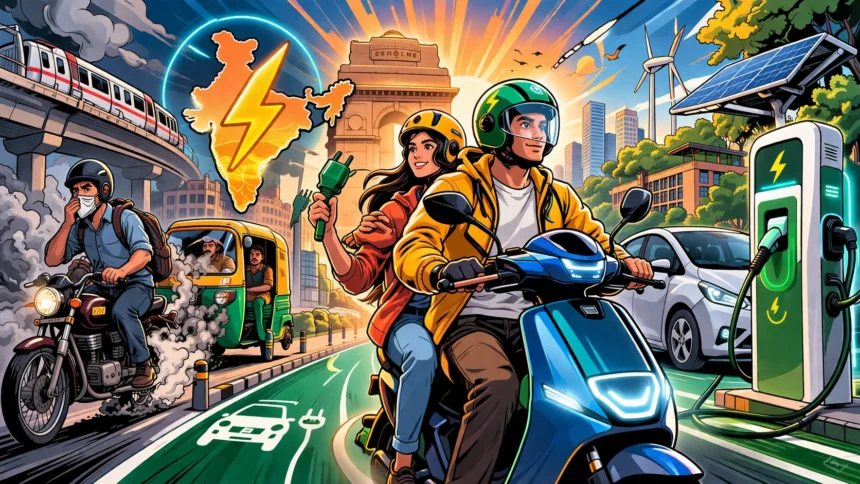
Delhi EV Policy 2026 is here with shocking subsidies, bans, and EV rules. Know what changes, benefits, and hidden impacts before it’s too late.
- ⚡ Delhi Just Hit the Accelerator. Something big is happening in Delhi… and no, it’s not another traffic jam.
- 🔍 What is Delhi EV Policy 2026?
- 📊 The Real Reason Behind This Policy (Hidden Truth)
- 💰 Subsidies That Feel Almost Illegal (But Are Real)
- 🧠 Insider Insight
- 🚫 The Big Shock: Petrol & Diesel Slowly Out
- 🏫 Even Schools Are Not Safe
- 🏢 Government Goes Full EV Mode
- 🔋 Charging Infrastructure: The Real Game Changer
- 💸 Hidden Bonus: More Savings You Didn’t Expect
- 🚗 Old Vehicle Owners: Big Twist
- 🧪 The Strange Part Nobody Notices
- 📉 What Experts Are Quietly Saying
- 🤔 Should You Buy an EV Now?
- 🧠 Final Verdict: This Is Bigger Than It Looks
- ❓ FAQs
- 1. What is Delhi EV Policy 2026?
- 2. What subsidy is offered for electric scooters?
- 3. When will petrol two-wheelers be banned?
- 4. Are EVs tax-free in Delhi?
- 5. What is the benefit of scrapping old vehicles?
- 6. Will charging stations increase?
- 7. Is this policy final?
- 🚀 So… are you switching to EV or waiting till the rules force you?
- 🔗 Related Post
- 📰 Credit
⚡ Delhi Just Hit the Accelerator. Something big is happening in Delhi… and no, it’s not another traffic jam.
It’s cleaner, quieter… and honestly, a little shocking.
The Delhi government has quietly dropped a policy that could change how you buy vehicles forever. Petrol and diesel? Slowly being shown the exit door. Electric vehicles? Getting VIP treatment.
Here’s the punchline:
“Your next vehicle decision might not be a choice—it might be a rule.”
Before you shrug this off as “just another policy,” wait. Because this one comes with real money, real deadlines, and real consequences.
And most people haven’t fully understood what’s coming.
🔍 What is Delhi EV Policy 2026?
The Delhi EV Policy 2026–2030 is a new draft policy designed to:
- Reduce pollution in Delhi
- Push electric vehicles (EVs) aggressively
- Improve air quality (finally!)
- Build a cleaner transport system
According to reports, this policy is inspired by Article 21 of the Indian Constitution—basically saying clean air is your fundamental right.
👉 You can check broader EV initiatives in India here:
https://www.niti.gov.in
Sounds noble, right? But here’s where things get interesting…
📊 The Real Reason Behind This Policy (Hidden Truth)
Let’s talk numbers.
- Around 23% of Delhi’s pollution comes from vehicles (especially in winter)
- 67% of vehicles are two-wheelers
- Three-wheelers and small commercial vehicles are major contributors
Translation?
Your daily scooter ride is part of the pollution problem.
That’s why the government is targeting:
- Two-wheelers
- Autos (e-rickshaws)
- Small trucks
And they’re not being subtle about it.
💰 Subsidies That Feel Almost Illegal (But Are Real)
Here’s where things start sounding crazy.
🛵 Electric Two-Wheelers
- Year 1: ₹10,000 per kWh (max ₹30,000)
- Year 2: ₹6,600 per kWh (max ₹20,000)
- Year 3: ₹3,300 per kWh (max ₹10,000)
👉 Translation: Buy early, save more.
🛺 Electric Autos (Three-Wheelers)
- Year 1: ₹50,000 subsidy
- Year 2: ₹40,000
- Year 3: ₹30,000
🚚 Small Electric Trucks (N1 Category)
- Year 1: ₹1,00,000
- Year 2: ₹75,000
- Year 3: ₹50,000
🧠 Insider Insight
Most people miss this:
👉 Subsidies decrease every year.
This means early adopters win big.
Late buyers? Not so much.
🚫 The Big Shock: Petrol & Diesel Slowly Out
Here’s the part nobody is talking loudly about…
🛑 Timeline Restrictions
- Jan 1, 2027 → Only electric three-wheelers will be registered
- April 1, 2028 → Only electric two-wheelers will be registered
Yes, you read that right.
Petrol bikes? Practically phased out.
🏫 Even Schools Are Not Safe
- School buses must gradually shift to EVs
- Target:
- 10% in first 2 years
- 20% by third year
- 30% by 2030
Even your kid’s school ride is going electric.
🏢 Government Goes Full EV Mode
Another big move:
- All new government vehicles = electric
- Delhi Transport Corporation buses = electric
- Delivery & fleet companies = petrol/diesel banned from 2026
This is not just policy.
This is a forced transition.
🔋 Charging Infrastructure: The Real Game Changer
The government knows one thing:
No charging = no EV adoption.
So they’re planning:
- Massive expansion of charging stations
- Battery swapping networks
- Public charging at dealerships
- Separate charging points for 2-wheelers and 4-wheelers
Plus…
👉 A single-window digital system to make setup easy.
No paperwork headache.
(At least, that’s the promise.)
💸 Hidden Bonus: More Savings You Didn’t Expect
Here’s what most people ignore:
- 100% road tax exemption
- 100% registration fee waiver
- Cheaper running cost vs petrol
This means:
👉 EVs = upfront savings + long-term savings
🚗 Old Vehicle Owners: Big Twist
Got an old vehicle?
The government has a plan.
💥 Scrappage Incentives
- ₹10,000 for two-wheelers
- ₹25,000 for three-wheelers
- ₹1 lakh for cars (limited buyers)
- ₹50,000 for small trucks
Translation:
They want you to dump your old vehicle ASAP.
🧪 The Strange Part Nobody Notices
This sounds good on paper…
But here’s the uncomfortable truth:
- EV charging still depends on electricity (often coal-based)
- Battery recycling is still evolving
- Infrastructure rollout takes time
So while EVs reduce pollution locally…
The bigger environmental picture is still… complicated.
📉 What Experts Are Quietly Saying
Industry experts believe:
- EV adoption could jump 3x in Delhi by 2030
- Early buyers will benefit the most
- Policy could become a model for other states
But they also warn:
👉 Infrastructure must keep up, or chaos follows.
🤔 Should You Buy an EV Now?
Let’s simplify this decision.
✅ Buy Now If:
- You want maximum subsidy
- You drive daily in the city
- You plan long-term savings
❌ Wait If:
- You’re unsure about charging access
- You need long highway range
- You want better battery tech
🧠 Final Verdict: This Is Bigger Than It Looks
This is not just an EV policy.
It’s a behavior change policy.
It tells you:
- What to drive
- When to switch
- How to save
And slowly…
What you won’t be allowed to do anymore.
❓ FAQs
1. What is Delhi EV Policy 2026?
Delhi EV Policy 2026 is a government plan to promote electric vehicles and reduce pollution by offering subsidies and restricting petrol/diesel vehicles.
2. What subsidy is offered for electric scooters?
Up to ₹30,000 in the first year, decreasing in later years.
3. When will petrol two-wheelers be banned?
From April 1, 2028, only electric two-wheelers will be registered.
4. Are EVs tax-free in Delhi?
Yes, EVs get 100% exemption on road tax and registration fees.
5. What is the benefit of scrapping old vehicles?
You can get incentives up to ₹1 lakh depending on the vehicle type.
6. Will charging stations increase?
Yes, the government plans large-scale expansion of charging and battery swapping infrastructure.
7. Is this policy final?
No, it is currently a draft policy and may change before final approval.
🚀 So… are you switching to EV or waiting till the rules force you?
Drop your thoughts in the comments 👇
Share this with someone still planning to buy a petrol bike 😅
Because let’s be honest—
this change is coming faster than your next fuel price hike.
🔗 Related Post
👉 “India Nuclear Energy: The Move That Shook Everyone”
📰 Credit
NBT